Which Filtration Technology is Best for Industrial Machinery?
Oil cleanliness is one of the most critical factors affecting the reliability of rotating machinery. Studies show that over 70% of hydraulic and lubrication system failures are caused by oil contamination.
Contaminants such as solid particles, water, sludge, and oxidation products can significantly reduce the life of bearings, gears, pumps, and turbines.
To control contamination, two common filtration technologies are used in industrial systems:
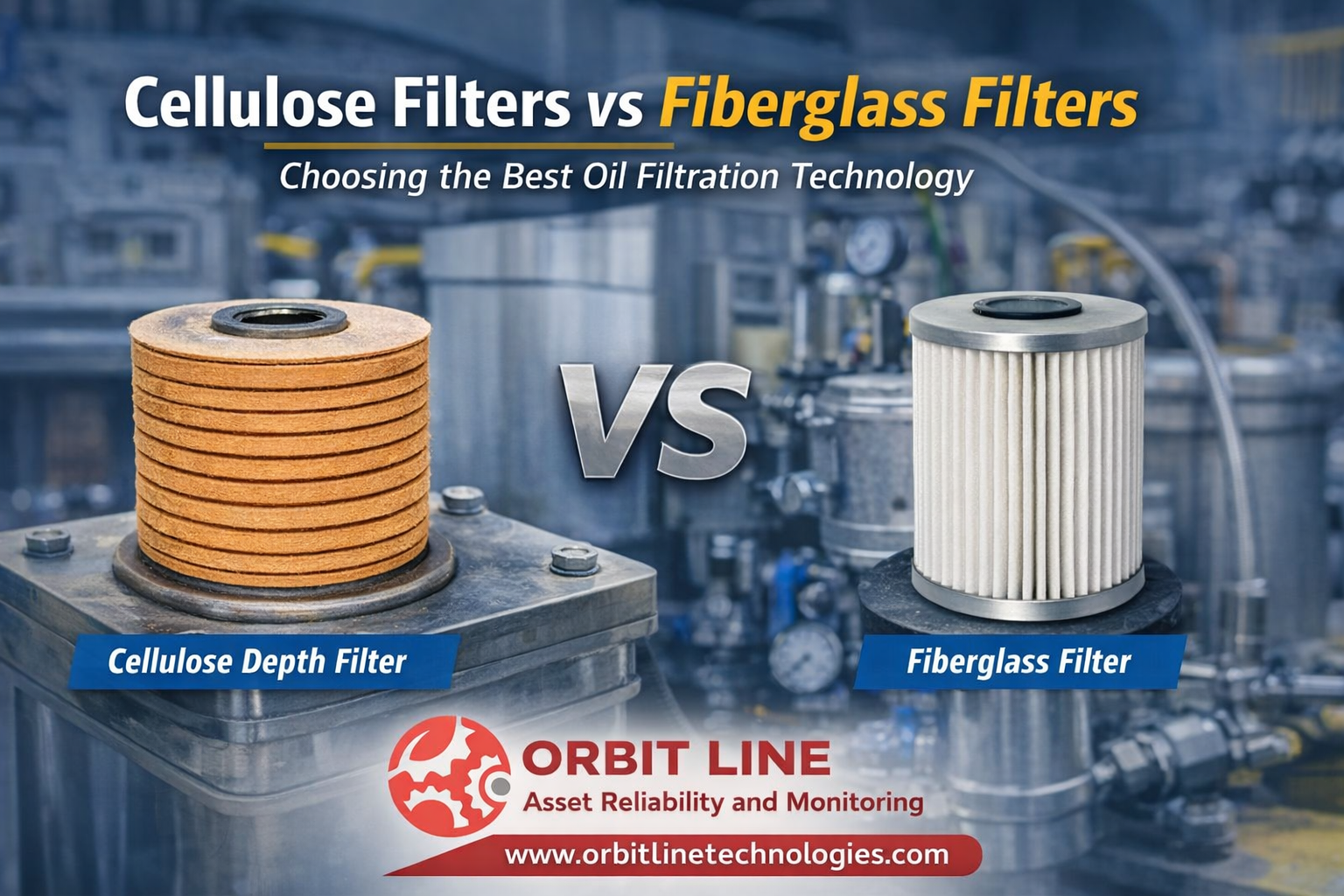
Cellulose depth filters
Fiberglass (micro-glass) filters
Each filtration media has unique advantages depending on the application.
At ORBITLINE – Asset Reliability and Monitoring, selecting the proper filtration technology is an important part of improving machinery reliability and extending oil life.
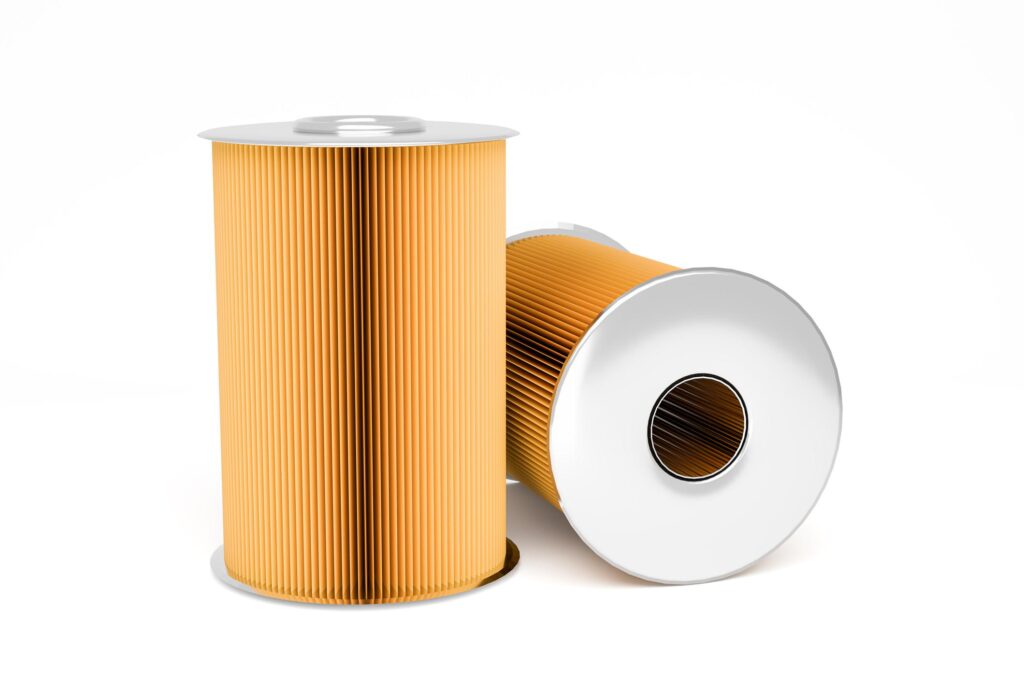
Cellulose Depth Filters
Cellulose filters are made from compressed natural fibers arranged in multiple layers to create a depth filtration structure.
Unlike surface filters, contaminants are captured through the entire thickness of the filter media, allowing the filter to hold a large amount of contamination before replacement is required.
Advantages of Cellulose Filters
• High dirt-holding capacity
• Effective removal of fine particles around 3 microns
• Ability to absorb water contamination
• Can reduce varnish and sludge formation
• Suitable for continuous oil cleaning systems
Because of their absorption properties, cellulose filters are particularly effective in removing water contamination from lubrication oil.
Typical Applications
Turbine lubrication systems
Gearbox lubrication systems
Hydraulic reservoirs
Marine engines
Large rotating equipment
Cellulose filtration is commonly used in offline oil cleaning systems, where oil is continuously circulated through the filter to maintain high cleanliness levels.
Fiberglass (Micro-Glass) Filters
Fiberglass filters are made from very fine glass fibers arranged in a pleated structure.
This design allows high filtration efficiency while maintaining low pressure drop and stable oil flow.
Fiberglass filters are widely used in inline filtration systems where the oil passes through the filter during normal machine operation.
Advantages of Fiberglass Filters
• Very high filtration efficiency (1–5 microns)
• Low pressure drop
• High mechanical strength
• Long service life
• Excellent protection for sensitive components
Fiberglass media is especially effective at capturing hard contamination particles such as metal wear debris or dust.
Typical Applications
Hydraulic systems
Pumps and compressors
Servo valve protection
Industrial lubrication systems
High-pressure filtration systems
Comparison: Cellulose vs Fiberglass Filters
| Feature | Cellulose Filter | Fiberglass Filter |
|---|---|---|
| Filtration method | Depth filtration | Surface / pleated filtration |
| Typical filtration rating | ~3 microns | 1–5 microns |
| Dirt holding capacity | Very high | High |
| Water removal capability | Yes | No |
| Pressure drop | Moderate | Low |
| Typical installation | Offline filtration | Inline filtration |
Best Practice for Industrial Lubrication Systems
In many critical industrial machines, the most effective strategy is combining both filtration technologies.
Recommended approach
Inline fiberglass filter
Provides immediate protection for pumps, valves, and bearings.
Offline depth filtration system
Continuously removes water, sludge, and oxidation products.
This approach significantly improves oil cleanliness and reduces equipment failures.
Why Oil Filtration is Critical for Machinery Reliability
Poor oil cleanliness can lead to serious operational problems such as:
Bearing damage
Hydraulic valve sticking
Pump wear
Varnish formation in turbines
Increased vibration and temperature
By implementing proper oil filtration and condition monitoring programs, plants can improve reliability and reduce maintenance costs.
ORBITLINE Reliability Services
At ORBITLINE – Asset Reliability and Monitoring, we support industrial facilities in Saudi Arabia with advanced predictive maintenance services including:
Vibration analysis
Oil analysis and contamination diagnostics
Infrared thermography inspection
Ultrasound inspection
Laser shaft alignment
Field dynamic balancing
Our mission is to help industries achieve higher equipment reliability, longer asset life, and lower maintenance costs.