By ORBITLINE – Asset Reliability & Monitoring
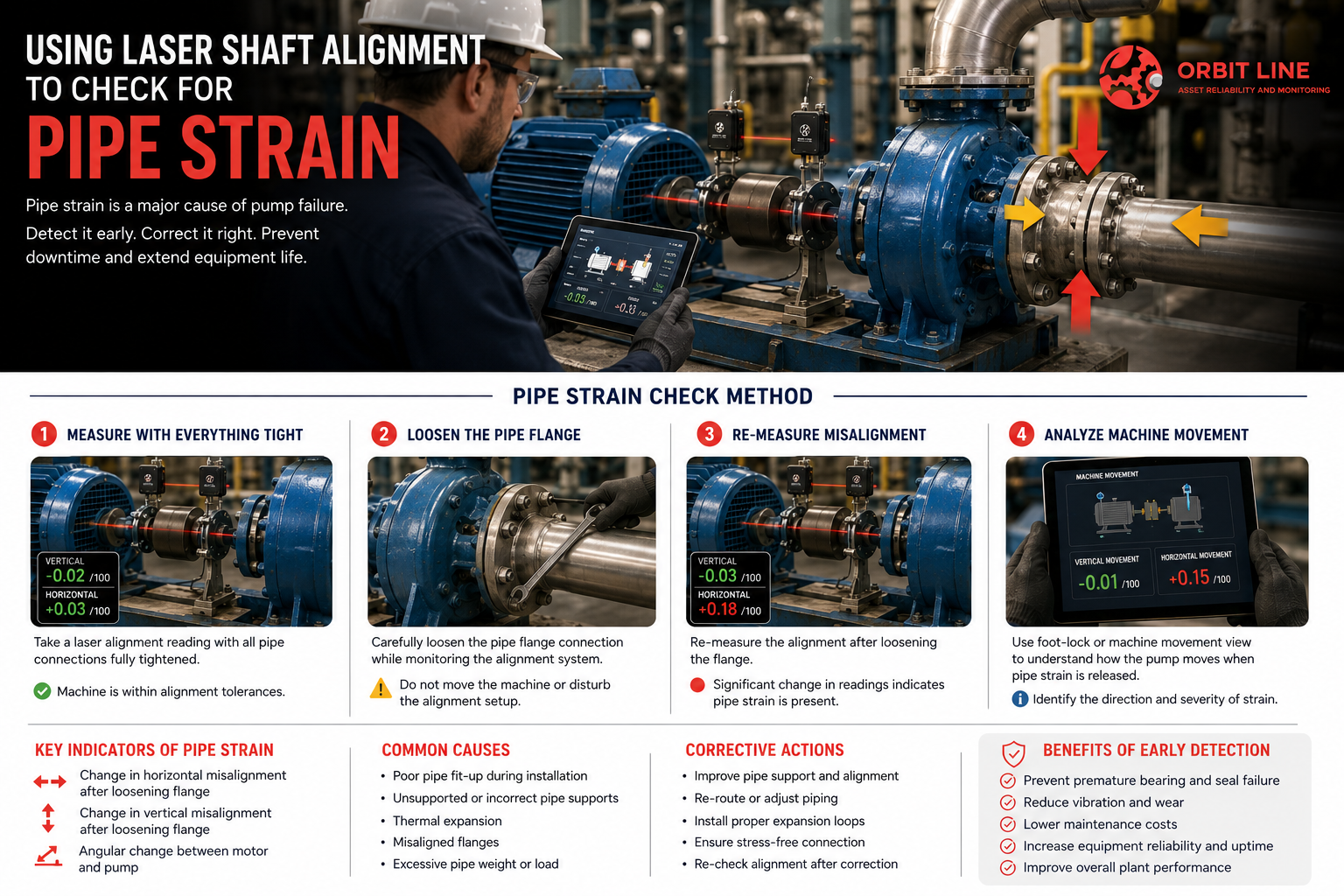
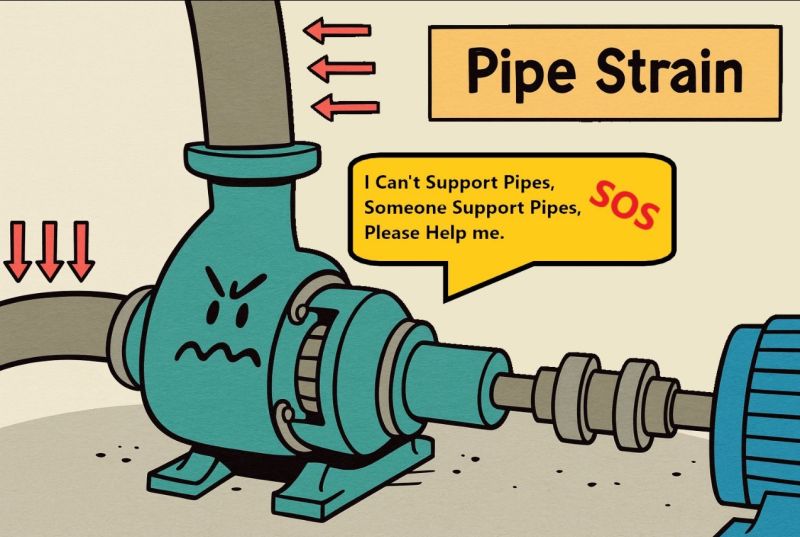
In many industrial facilities, piping systems are connected directly to pumps, compressors, and other rotating equipment. While these connections are necessary for process flow, they can introduce pipe strain when the piping is not properly supported. Pipe strain occurs when excessive forces from the piping are transferred to the equipment casing due to poor or insufficient pipe supports such as stiff legs, hangers, or guides.
This condition can create serious reliability problems. It can make flange bolting difficult, cause premature seal failures, and even distort or move the pump base. For engineers and technicians performing precision laser shaft alignment, pipe strain can be particularly problematic because it introduces hidden forces that affect machine position and alignment readings.
A Field Case: Unexpected Motor Movement
Recently, during a precision shaft alignment training exercise on a small pump, an unusual behavior was observed. Each time the trainees tightened the motor hold-down bolts, the motor moved upward vertically by 10–20 mils (0.010″–0.020″) instead of moving downward as normally expected.
Initially, the team suspected soft foot, a common cause of alignment issues. However, measurements showed only 2 mils of soft foot, which was within acceptable limits and unlikely to explain the problem.
The team then checked other potential causes:
-
The base frame was inspected to ensure it was properly secured.
-
The coupling was examined; although it was stiff, it appeared normal.
-
Additional testing showed that when someone stepped on the motor, the vertical measurement changed by more than 10 mils, indicating external forces acting on the machine.
These observations suggested that something outside the machine itself was influencing the alignment.
Investigating the Entire System
Instead of focusing only on the motor and pump, the team decided to inspect the entire piping and support system.
A pipe support (stiff leg) was located under the suction piping approximately four feet from the pump inlet. When one of the mechanics checked the support, it moved freely and could be pulled out with almost no effort. This revealed the real issue: the support was not actually carrying the pipe load.
The piping connected to the pump, including the process fluid, was estimated to weigh around 6,000 pounds. Rather than being supported by the pipe support structure, this load was effectively being carried by:
-
Three pump feet, and
-
Three ½-inch foundation bolts
In other words, the pump was supporting the piping instead of the piping supporting itself. This condition introduced severe pipe strain into the pump casing and base.
Corrective Actions
The team concluded that alignment work should not continue until the piping issue was corrected. The recommended actions included:
-
Installing a new properly designed pipe support under the suction line
-
Rechecking the coupling condition and stiffness
-
Inspecting the pump baseplate for rigidity
-
Verifying that foundation bolts are tight
-
Checking the grout integrity beneath the base
Only after addressing these factors should precision alignment be attempted again.
Key Lesson: Look Beyond the Coupling
One of the most common mistakes during shaft alignment is focusing only on the motor, pump, and coupling. However, rotating equipment is part of a larger system that includes piping, supports, foundations, and structural components.
Pipe strain can easily introduce hidden forces that distort equipment alignment and lead to:
-
Increased vibration
-
Seal and bearing failures
-
Coupling damage
-
Premature equipment wear
For reliable alignment results, it is essential to inspect the entire machine system, including piping supports and structural integrity.
ORBITLINE Insight
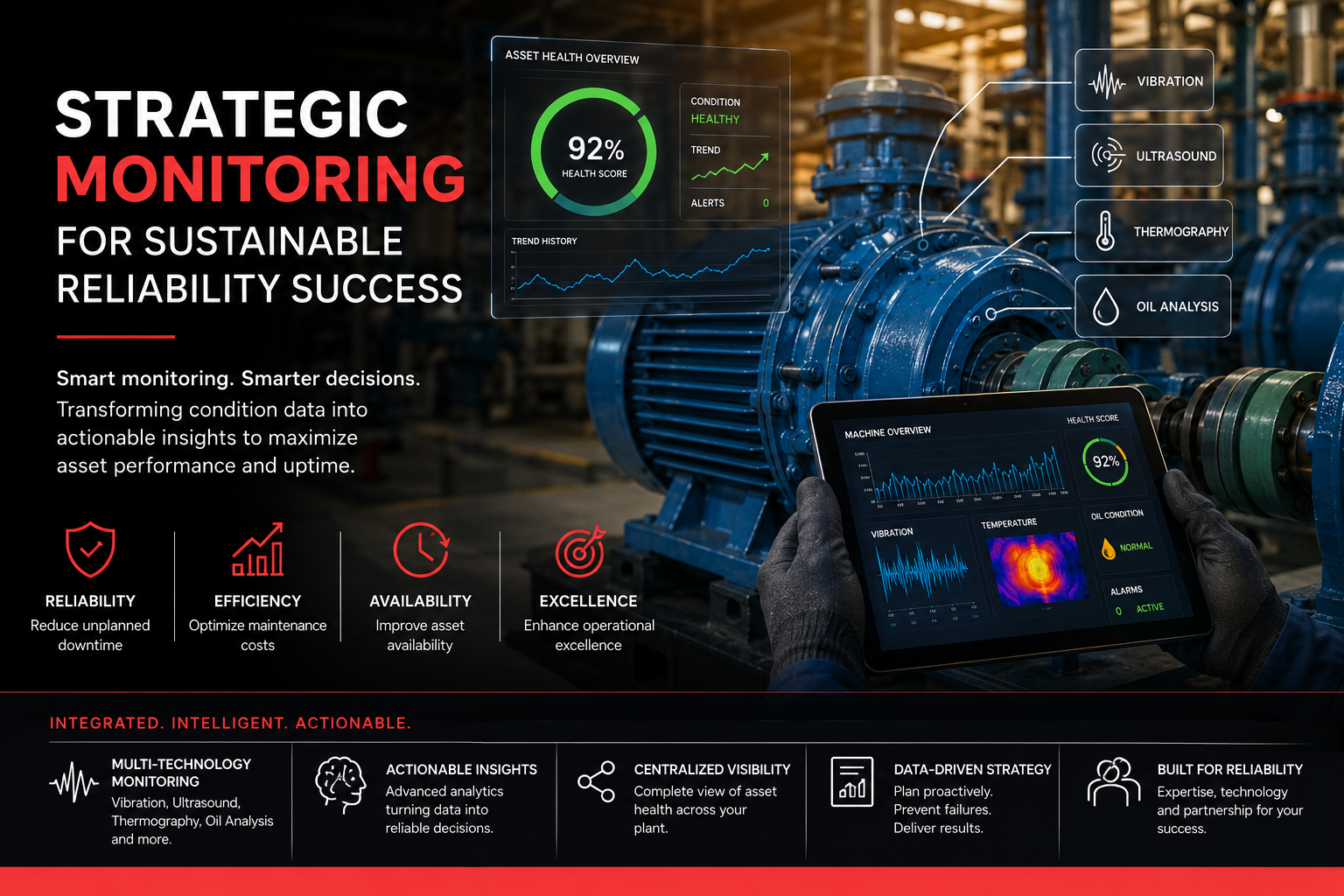
At ORBITLINE, our field engineers always evaluate the complete mechanical system when performing services such as:
-
Laser Shaft Alignment
-
Vibration Analysis
-
Pipe Strain Evaluation
-
Dynamic Motion Amplification
-
Reliability Diagnostics
Identifying issues like improper pipe supports or structural flexibility ensures that alignment corrections are sustainable and equipment reliability is improved.