A Practical Guide by ORBITLINE – Asset Reliability & Monitoring
- w thermal expansion
- Prevent misalignment stress
Housing Integrity
- Split housings must not be mixed
- Improper assembly reduces bearing life
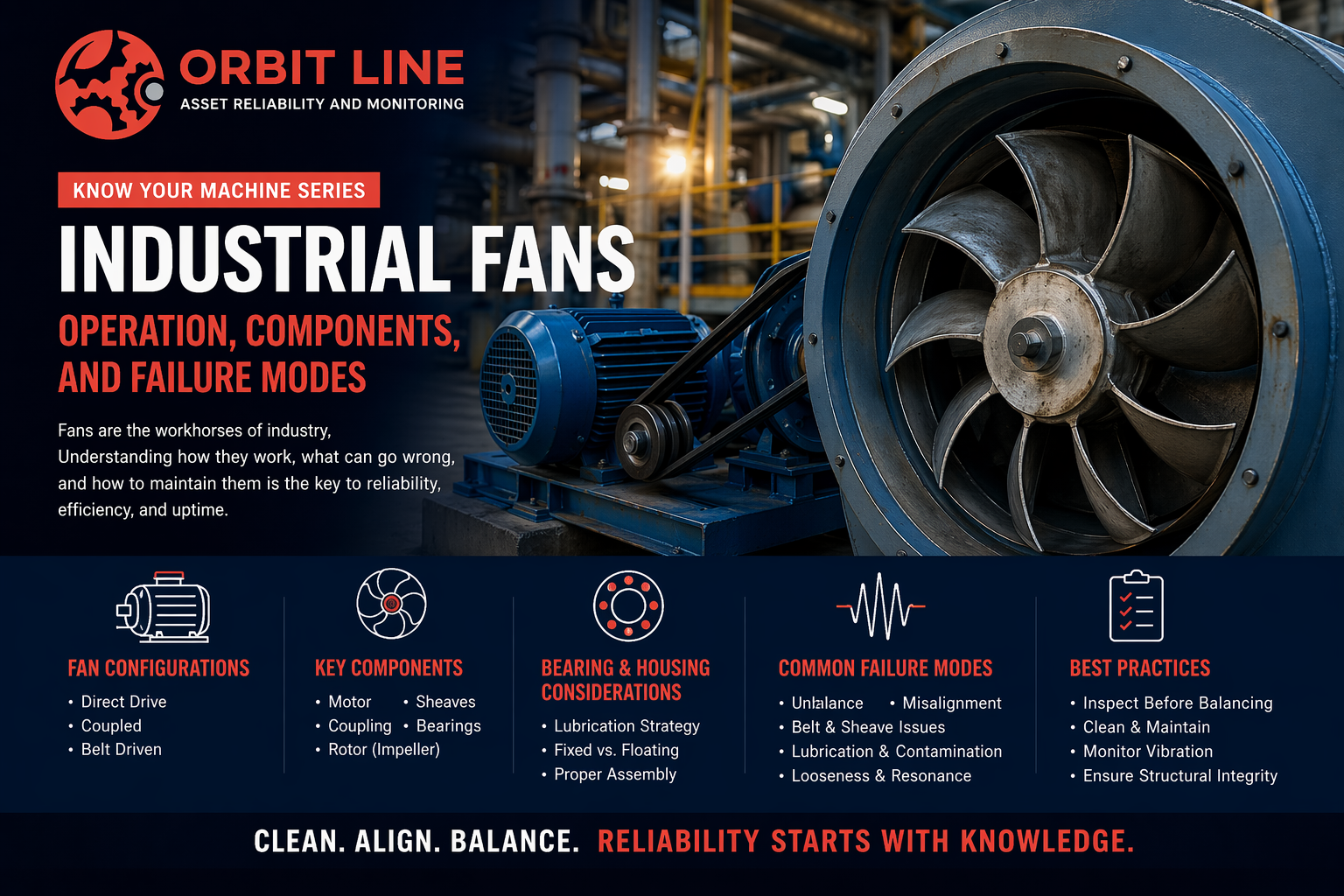
Common Failure Modes in Fans
1. Unbalance
- Typically shows at 1X running speed
- Caused by dirt, rust, or wear
2. Structural Issues
- Weak base or damaged grout
- Causes looseness and resonance
3. Misalignment
- Affects motor and bearing life
- Common in coupled and belt systems
4. Belt & Sheave Problems
- Misalignment
- Wear or eccentric pulleys
- Incorrect tension
5. Lubrication & Environmental Effects
- Contamination
- Overheating
- Improper lubrication strategy
Critical Insight: Inspection Before Balancing
Balancing a dirty or damaged fan will not solve the problem
Before performing dynamic balancing:
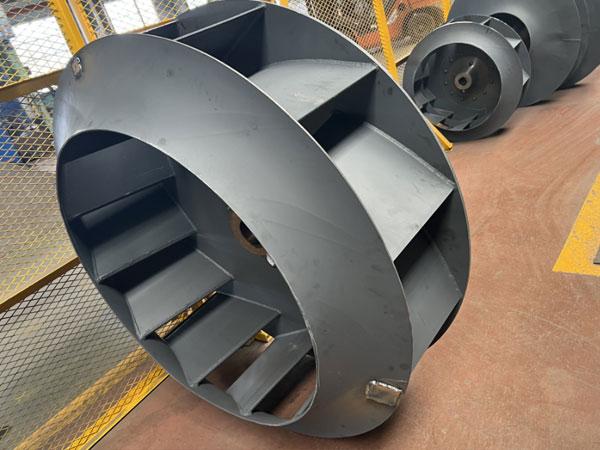
Clean the impeller
Inspect for wear or missing parts
Check base and structure
Verify no looseness or resonance
Many balancing failures are actually mechanical or structural problems—not imbalance .
Best Practices for Fan Reliability
Routine Monitoring
- Monthly vibration checks
- Trend analysis
Maintenance Actions
- Clean fan regularly
- Inspect belts and couplings
- Check alignment
Engineering Control
- Ensure proper base stiffness
- Avoid resonance conditions
- Follow OEM recommendations
ORBITLINE Expert Approach
At ORBITLINE, we go beyond standard maintenance:
- Advanced vibration analysis (ISO 10816 / 20816)
- Field dynamic balancing (rigid & flexible rotors)
- Structural & resonance diagnostics (FRF / ODS / MA)
- Laser alignment and precision maintenance
Key Takeaway
Fan reliability depends on condition, not just balancing
To achieve long-term stability:
- Clean the fan
- Fix structural issues
- Then perform balancing
Conclusion
Fans may appear simple—but they are highly sensitive machines.
Without proper understanding:
Repeated failures occur
Maintenance costs increase
Reliability decreases
With the right approach:
Vibration is minimized
Equipment life is extended
Plant performance improves