Pipe Strain: A Hidden Threat to Precision Shaft Alignment
Shaft Alignment | Machinery Maintenance | Reliability Engineering
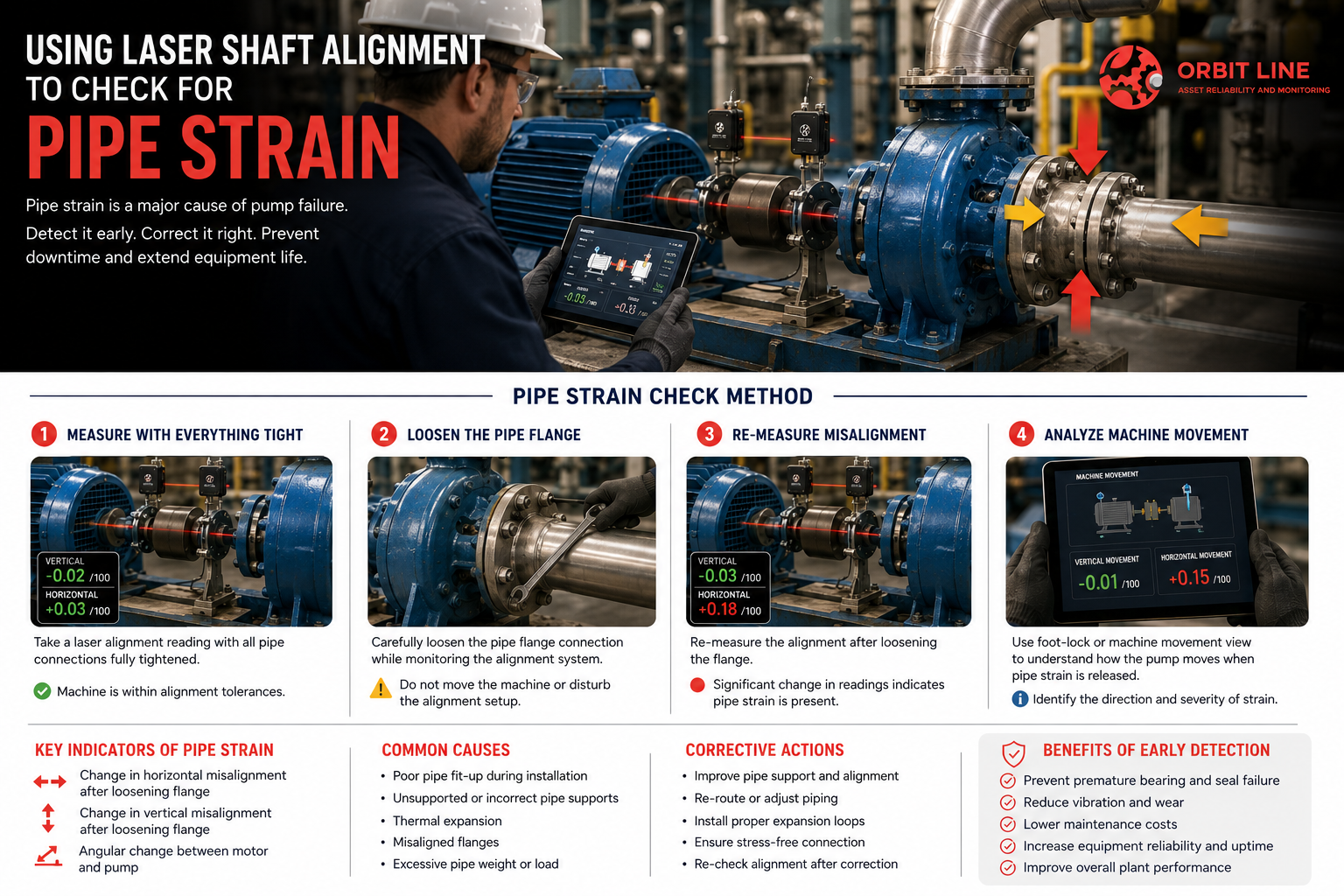
Pipe strain is one of the most commonly overlooked issues affecting rotating equipment reliability. It occurs when connected piping is not properly supported, forcing external loads onto pumps, motors, and their baseplates. These unintended forces can distort equipment alignment, overload bearings and seals, and significantly reduce machine life.
For engineers performing precision shaft alignment, pipe strain can completely undermine the accuracy of the alignment process if not identified and corrected early.
What Causes Pipe Strain?
Pipe strain typically develops due to:
Inadequate or incorrectly installed pipe supports
Missing or loose pipe shoes, stiff legs, or hangers
Thermal expansion not properly accounted for
Poor piping design or installation practices
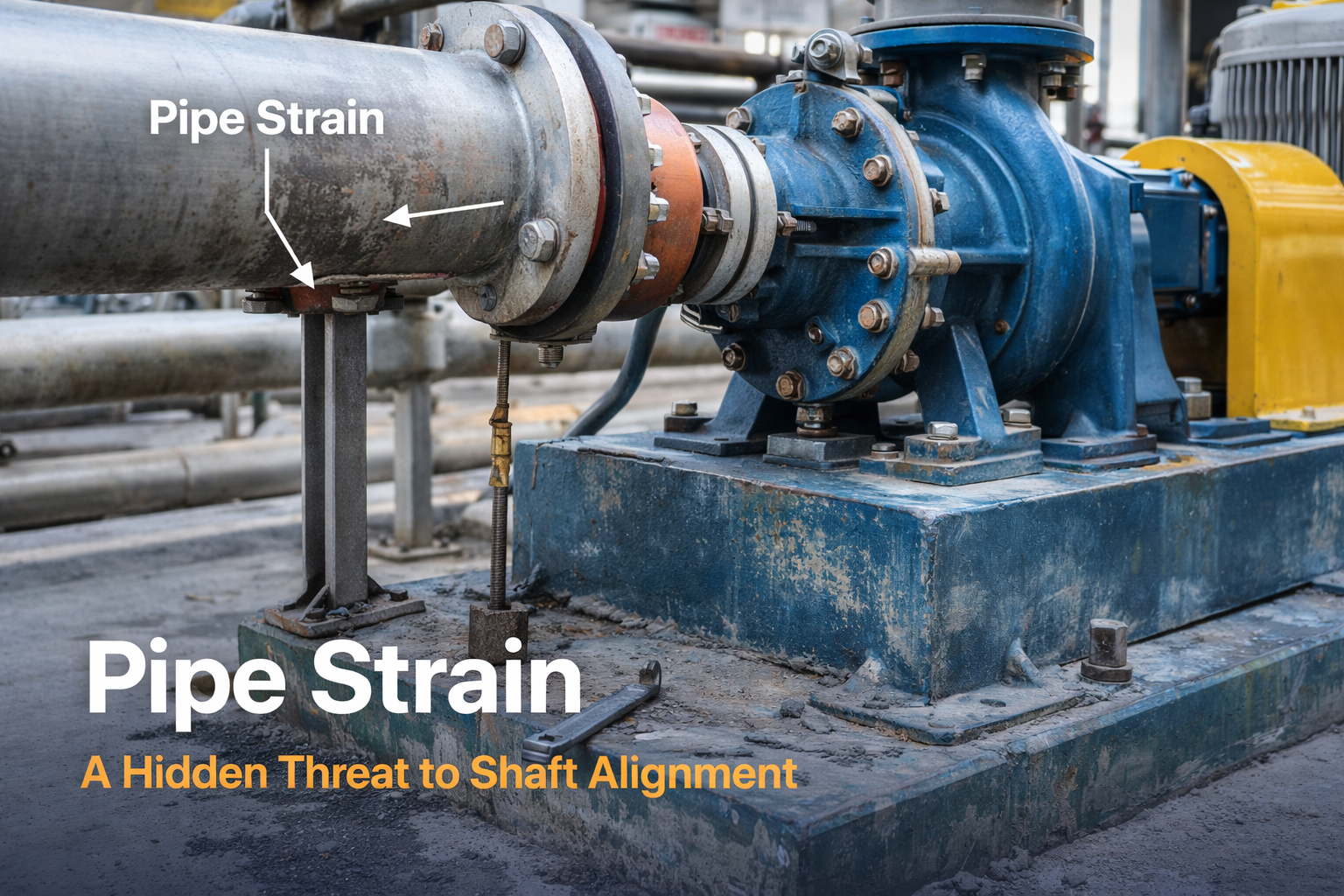
When piping is unsupported, its weight—and the weight of the process fluid—is transferred directly to the equipment nozzles.
Why Pipe Strain Is a Serious Reliability Issue
Pipe strain can lead to:
Difficulty aligning couplings
Shaft alignment values changing after bolt tightening
Premature seal and bearing failures
Excessive vibration and structural stress
Baseplate distortion or foundation movement
In many cases, alignment appears acceptable until the machine is fully bolted down or put into operation—at which point problems rapidly emerge.
A Real-World Alignment Challenge
During a routine alignment activity on a small pump, unusual behavior was observed. Each time the motor hold-down bolts were tightened, the motor frame lifted vertically instead of settling downward. Vertical movement of approximately 10–20 mils was recorded—far beyond acceptable limits.
Initial checks focused on common causes:
Soft foot inspection showed only minimal correction required
Baseplate condition appeared visually acceptable
Coupling condition was within normal limits
Despite these checks, the alignment readings continued to shift.
Looking Beyond the Machine
The investigation expanded to include the entire piping system. A support located near the pump suction line was found to be ineffective—it was not carrying any load. The piping was essentially suspended by the pump nozzles.
An estimated several tons of piping and fluid weight were being supported by the pump casing and mounting bolts alone. Under these conditions, accurate shaft alignment was impossible.
Corrective Actions Identified
Before proceeding with any further alignment work, the following actions were recommended:
Install or repair pipe supports to carry piping loads independently
Verify proper load transfer to supports
Inspect coupling stiffness and suitability
Confirm baseplate rigidity and grout condition
Ensure foundation and anchor bolts are secure
Only after these system-level corrections can precision alignment be performed reliably.
Key Lesson for Alignment Engineers
Precision shaft alignment is not just about lasers, shims, and couplings. It requires evaluating the entire machine system, including:
Piping
Supports
Foundations
Baseplates
Structural stiffness
Ignoring pipe strain can result in repeat alignment failures, increased vibration, and costly unplanned shutdowns.
ORBITLINE’s Engineering Approach
At ORBITLINE, we treat alignment as a system-level engineering task, not a standalone activity. Our services integrate:
Precision shaft alignment
Pipe strain assessment
Vibration analysis
Motion Amplification (RDI)
Structural and foundation evaluation
This holistic approach ensures alignment results remain stable under real operating conditions.