Introduction
Compressed air is one of the most expensive utilities in any industrial facility—yet it is also one of the most wasted.
Air leaks are often invisible, ignored, and underestimated. But in reality:
Compressed air leaks can cost thousands of dollars every year per single leak.
With modern technologies like acoustic imaging, leaks can now be detected, visualized, and quantified instantly.
Why Compressed Air is Expensive
Producing compressed air is not just about electricity. It involves:
- Air compression energy
- Cooling and drying systems
- Filtration
- Maintenance and spare parts
- Distribution system (pipes, valves, regulators)
In reality:
True cost of compressed air ≈ 1.5 × electrical cost
How to Calculate the Cost of Air Leaks
A commonly used formula (from industry standards) is:
Annual Cost ($) =
(bhp×0.746×OperatingHours×Cost/kWh×LoadFactor)MotorEfficiency\frac{(bhp × 0.746 × Operating Hours × Cost/kWh × Load Factor)}{Motor Efficiency}MotorEfficiency(bhp×0.746×OperatingHours×Cost/kWh×LoadFactor)
Example Case
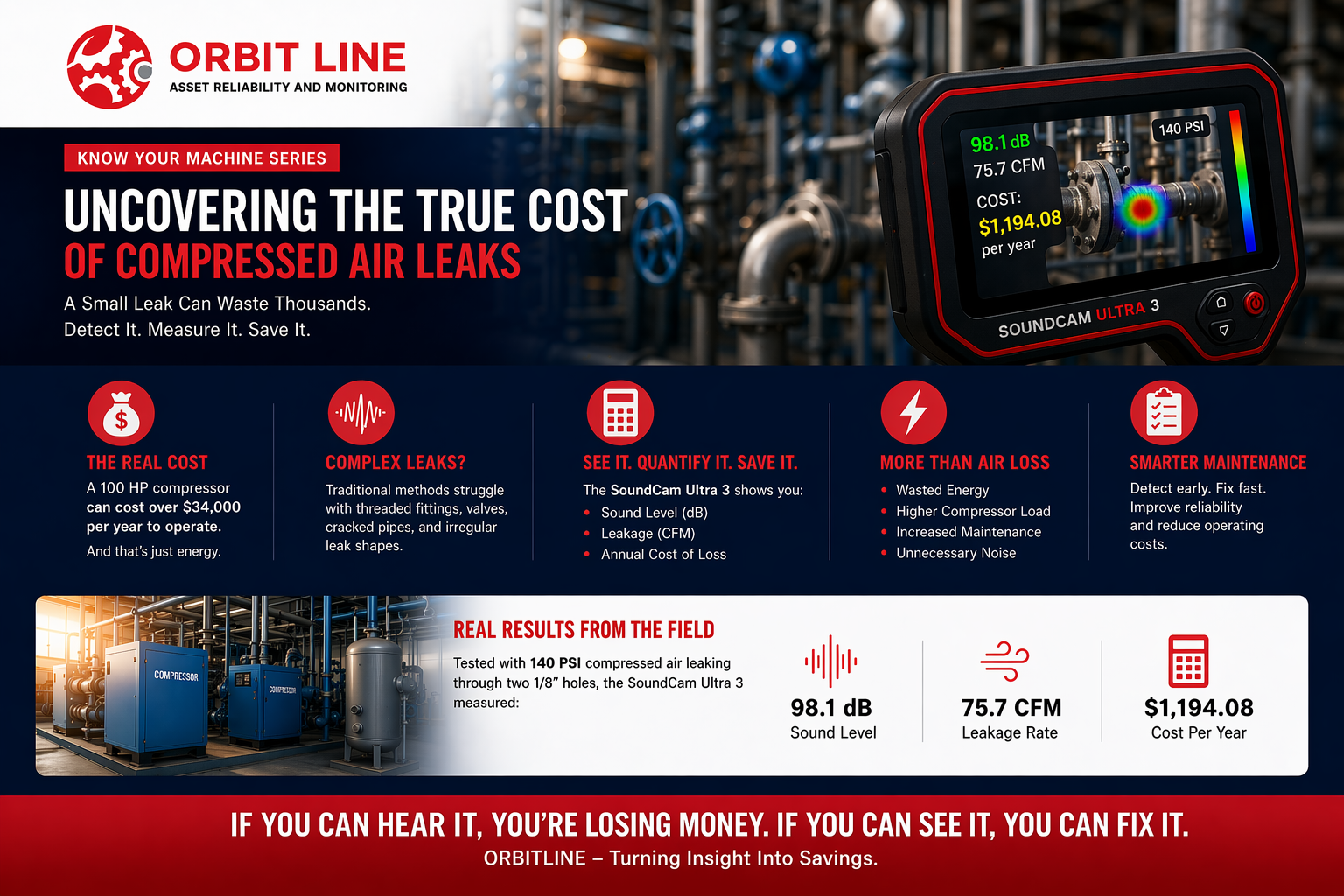
- Compressor: 100 hp (~101 bhp)
- Operating: 8760 hrs/year
- Electricity cost: $0.10/kWh
Results:
- Loaded cost: $33,354 / year
- Unloaded cost: $810 / year
- Total: $34,164 / year
And this is only the energy cost, not full system cost.
The Hidden Reality
Most plants underestimate the real cost because they ignore:
- Equipment depreciation
- Maintenance costs
- Air treatment systems
- System inefficiencies
Actual losses are significantly higher than calculated values
The Challenge with Traditional Leak Detection
Conventional methods struggle because:
- Many leaks are not perfect round holes
- Leaks occur in:
- Threaded fittings
- Valves
- Cracked pipes
- Flanges
This makes traditional calculation methods inaccurate and difficult.
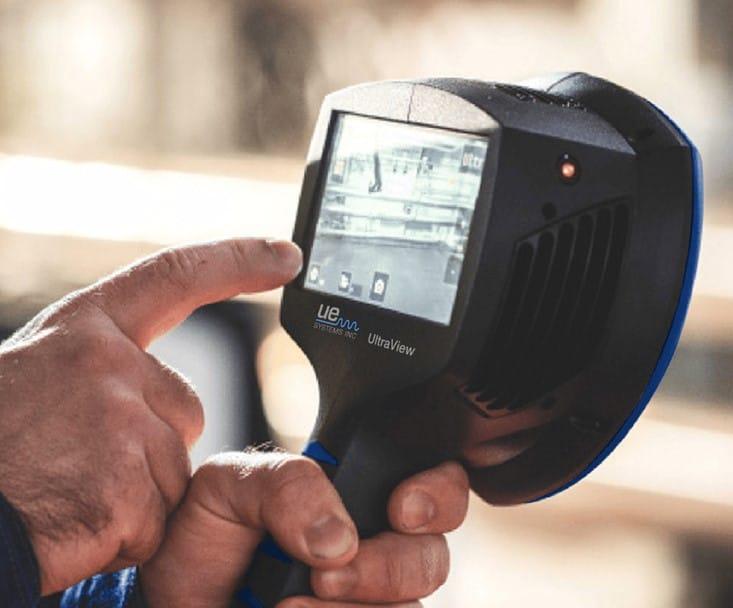
Modern Solution: Acoustic Imaging Technology
Advanced tools like acoustic cameras provide:
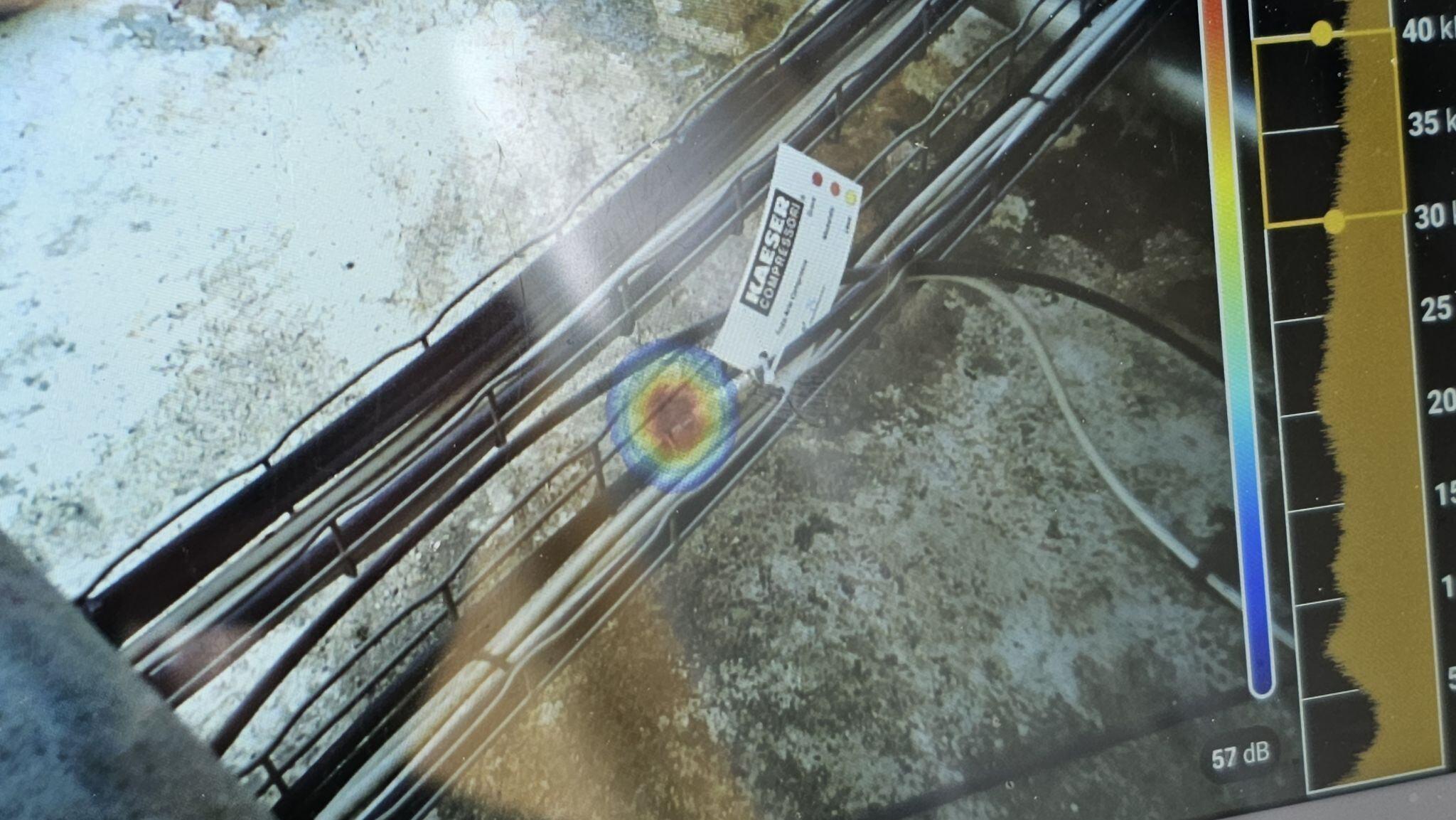
Real-Time Detection
- Visualize leaks instantly
- No need for shutdown
Accurate Measurement
- Sound-based detection (dB levels)
- Converts to:
- Flow rate (CFM)
- Cost per year
Multi-Application Capability
- Compressed air leaks
- Gas leaks
- Vacuum leaks
- Electrical partial discharge
Real Example (Field Scenario)
- Pressure: 140 psi
- Leak: Small drilled holes (~⅛”)
- Measured result:
Output:
- Sound level: 98.1 dB
- Flow rate: 75.7 CFM
- Annual cost: ~$1,194 per year (single leak)
Imagine multiple leaks across a plant…
Total losses can reach tens or hundreds of thousands annually
Why Air Leaks Are Dangerous
Compressed air leaks lead to:
- Wasted energy
- Increased compressor load
- Reduced system efficiency
- Higher maintenance cost
- Excess noise (safety risk)
ORBITLINE Approach
At ORBITLINE – Asset Reliability & Monitoring, we provide:
Advanced Leak Detection Services
- Acoustic imaging technology
- Ultrasound leak surveys
- Full system audits
What You Get:
- Leak location mapping
- Quantified loss (CFM & cost)
- Priority ranking
- ROI-based repair plan
Best Practices to Reduce Air Losses
Perform regular leak surveys
Fix leaks immediately (high ROI)
Monitor compressor load trends
Use acoustic/ultrasound technology Integrate into predictive maintenance