
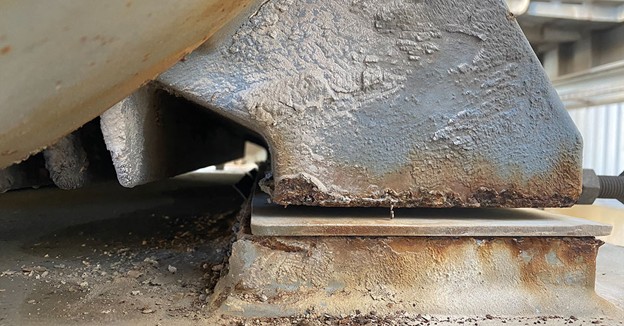
When it comes to on-site shaft alignment, the question always pops up: “How many shims under each foot?”
Here’s your practical, field-tested answer — ORBITLINE style.
Use the smallest number of shims possible
A simple principle: fewer shims = better stability. Too many shim layers can compromise load distribution, create gaps, introduce vibration paths, and reduce alignment integrity.
Choose shims that are flat, straight, and durable
Shims should:
- Be flat, free of burrs, rust, bends or dents.
- Be able to support the full weight of the machine without deformation.
- Withstand the service environment (chemicals, rain, dust, harsh indoor/outdoor conditions).
At ORBITLINE, we always mic the shim thickness and check for deformation before reuse or installation.
Use the thickest shim you can to reduce stack count
Instead of stacking many thin shims, use one or two thicker ones. This gives you a more robust mounting surface, reduces the risk of micro-gaps, and simplifies future removal or inspection.
Avoid damaged, rusty or deformed shims
If a shim shows signs of bending, cracking, excessive wear, rust pitting, or warping — just bin it. The cost of one compromised shim is far greater than the savings of reuse.
During shim stack removal, be sure to measure everything
When removing the stack:
- Clean the foot base and shim stack area from dirt, grit, rust or scale.
- Measure the entire stack for thickness, including any debris or corrosion layers.
- If in doubt, replace with a clean new stack rather than risk old-surface contamination.
Placement technique under the machine foot
- Slide the shim stack under the foot until contact with the bolt is made.
- Then slide it back about ¼ inch to ensure the shim doesn’t contact the bolt threads when the foot bolt is tightened.
- This avoids torque bending the shim or compromising its flatness.
Storage and housekeeping matter
Shims don’t just happen — they’re part of the maintenance discipline. Store them on a clean flat surface (e.g., shop towel, wiped bench) to avoid shipping grit or rust into your alignment stack. At ORBITLINE, we keep a dedicated “shim kit” drawer, audit shim stock for flatness annually, and tag any suspect pieces.
Best practice summary
- Use as few shims as possible — aim for one, two, rarely more than four.
- Shims must be clean, flat, and supporting the machine weight without deflection.
- Prefer thicker stock over a stack of thin plates.
- Avoid using compromised or second-tier shims.
- During alignment: clean the foot area, measure the entire stack (including grime), place shim stack correctly under bolt, slide back ¼ inch, and torque foot bolts carefully.
- Store and handle shims with care — this is part of the professional alignment toolkit.
Final word from ORBITLINE
Whether you’re aligning a pump, fan, gearbox or motor train, the shim stack is a small but critical part of the overall alignment setup. Done right, it supports your precision laser alignment, vibration reduction, and long-machine life objectives. Done wrong, it introduces creep, looseness, vibration and unexpected downtime.
At ORBITLINE, we bring laser alignment, field balancing, condition monitoring and full-train diagnostics to Saudi Arabia’s industrial heartland — and yes, the shim stack gets our same disciplined attention.
Need assistance with on-site alignment? Contact ORBITLINE at Admin@orbitlinetechnologies.com . We’re here to help you maintain alignment excellence.