Bearings: The Heart of Machine Health
By ORBITLINE – Precision Condition Monitoring & Reliability Services
In any rotating-machinery system, bearings are more than just accessories — they’re the central link between motion and load, precision and performance. If bearings degrade, the rest of the machine train feels it. Detecting bearing issues early and understanding the root cause are keys to prolonging equipment life, reducing downtime and avoiding unexpected failures.
What a Healthy Bearing Requires
For a bearing to perform reliably, it must receive:
- Cleanliness — from storage, handling, installation and operation
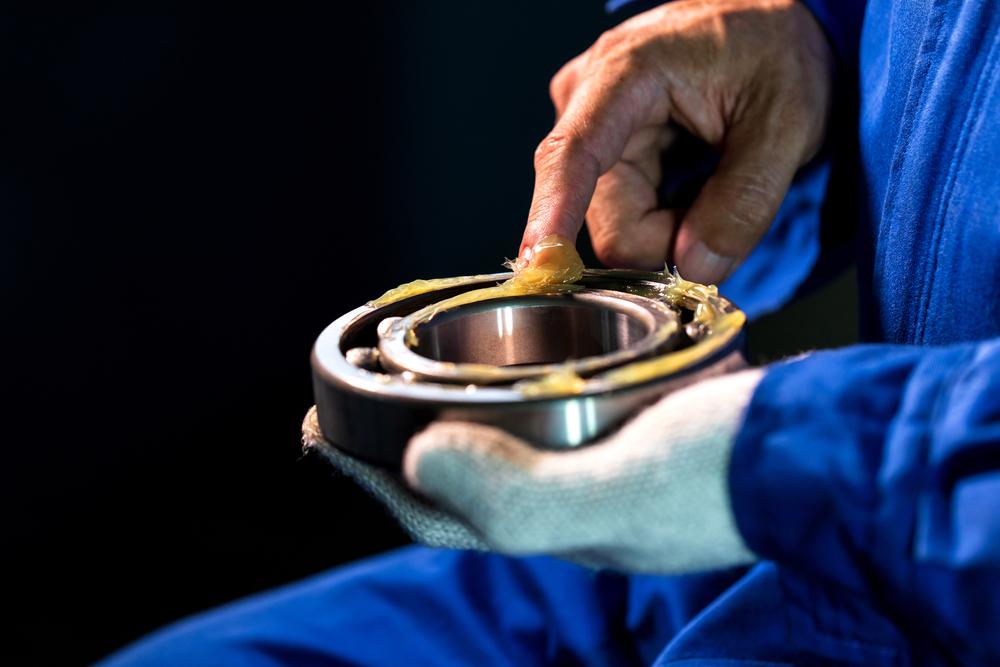
- Proper lubrication — correct grade, quantity, temperature and cleanliness
- Correct mounting, fit & loading — precise tolerances, proper seating, correct clearances
- Appropriate application — correct bearing type, size and design for the job
- Operating conditions within design limits — speed, temperature, load all within specification
When one or more of these is neglected, bearing life can be cut drastically.
What Usually Goes Wrong
At ORBITLINE we’ve seen many real-world failures, and the top culprits repeatedly are:
- Contaminated or poorly stored bearings
- Mixing or misapplying lubricant
- Using incorrect or worn mounting tools, or rough-handling the bearing housing
- Mounting a bearing that wasn’t designed for the machine’s speed/load profile
- Operating the machine outside temperature or speed limits
These may look like “just a bearing failure,” but they’re often the symptom of underlying mechanical or operational issues.
Diagnosing Beyond the Bearing
Bear in mind: not every vibration or noise is just a bearing issue. Some “bearing” failures are misdiagnosed. Common “imposters” include:
- Worn or damaged seals or shields
- Rubs or imbalance in the machine train
- Coupling misalignment or looseness
- Gear mesh or structural resonance
It’s the job of the reliability professional to look deeper, not stop at the bearing.
- Gear mesh or structural resonance
ORBITLINE’s Best Practice Checklist
- Store bearings in a clean, dry environment, only open the box when ready to install.
- Before installation, clean the mating surfaces, ensure correct fits, measure where needed.
- Use only qualified tools for mounting — avoid “dropping in” bearings or hammering them in sans care.
- Lubricant: check brand/spec, ensure no mixing, filter or clean if needed, and manage temperature.
- Monitor bearing temperature, vibration spectrum, lubrication condition — trending is your best friend.
- If a bearing fails, don’t simply replace it — ask why. Review load history, lubricant history, mounting practice, and machine conditions.
The Impact of Getting It Right
When bearings are kept in spec and well-monitored, you achieve:
- Fewer unexpected machine shutdowns
- Lower wrench-time for technicians
- Better reliability metrics (MTBF, uptime)
- Longer service life for more expensive assets
- Confidence that your condition monitoring program isn’t just reactive but proactive
Final Word from ORBITLINE
In your reliability journey — whether aligning turbines, balancing fans, inspecting gearboxes, or monitoring vibration — remember: the bearing is not just another component. It’s a key enabler of machine health. Treat it with care, monitor it with diligence, and your assets will thank you.
Need help with bearing diagnostics, vibration trending, or reliability consulting? Reach out to ORBITLINE in Saudi Arabia — we’re here to support your industrial uptime and reliability goals