Why Precision Alignment Is Not Optiona
At ORBIT LINE – Asset Reliability & Monitoring, we frequently encounter rotating equipment suffering from high vibration, premature bearing failures, and unexplained increases in motor current. In many of these cases, the root cause is not electrical—it is mechanical shaft misalignment.
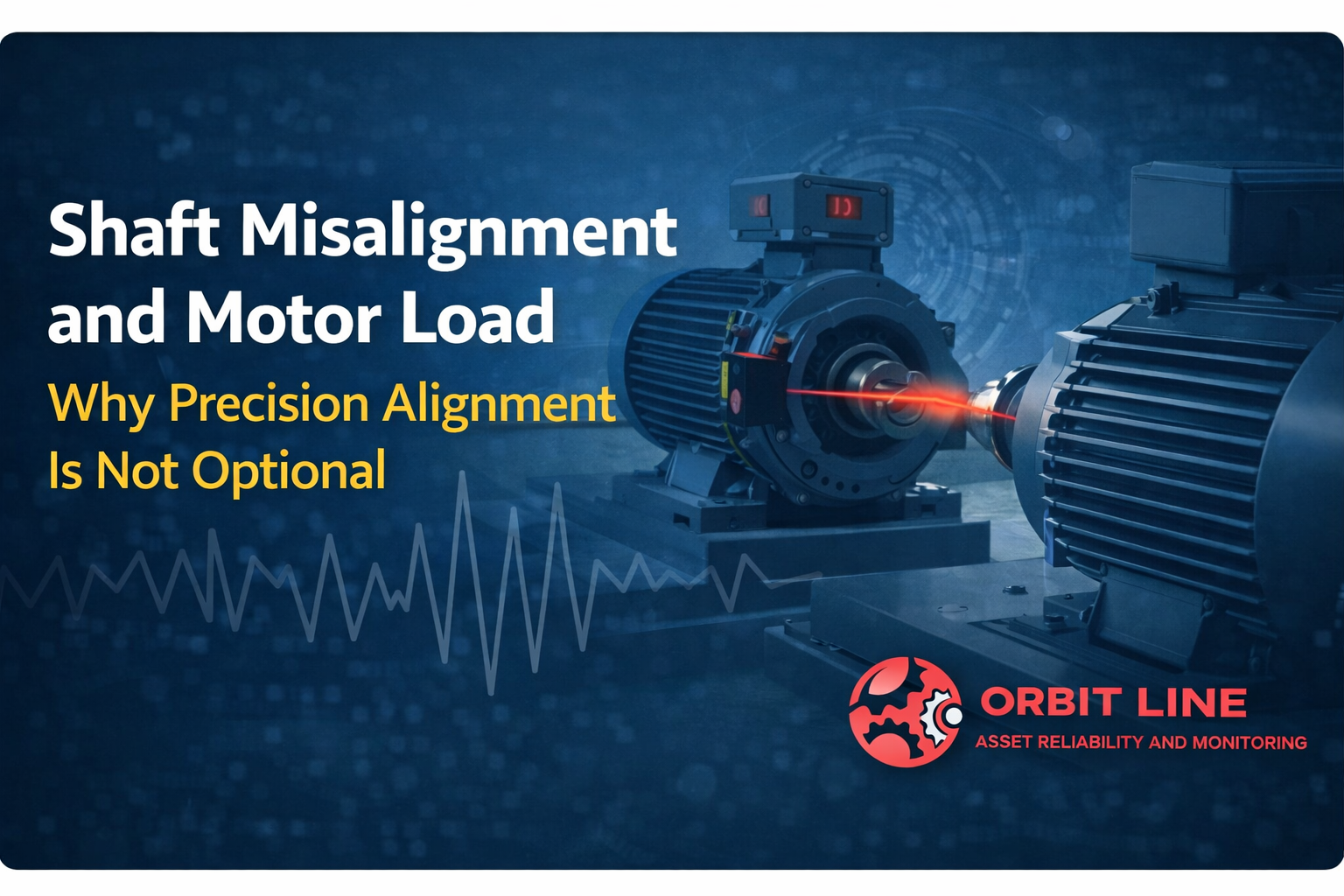
While misalignment is well known for generating vibration, its direct impact on motor load and energy consumption is often underestimated. This blog explores the relationship between shaft misalignment and motor loading, and why precision alignment is critical for machine reliability.
Understanding Misalignment Beyond Vibration
Shaft misalignment occurs when the rotational centerlines of the driver and driven equipment are not collinear under operating conditions. This can be:
Angular misalignment
Offset (parallel) misalignment
Combined misalignment
When misalignment exists, additional forces are transmitted through:
Bearings
Couplings
Shafts
Motor windings (indirectly)
These forces result in increased mechanical resistance, which the motor must overcome by drawing more current.
How Misalignment Increases Motor Load
Electric motors are designed to operate within a defined mechanical load range. When misalignment is present:
Bearing friction increases
Radial and axial forces rise
Shaft bending stress increases
Coupling reaction forces grow
As a result, the motor compensates by increasing torque output, which leads to:
Higher current draw
Elevated operating temperature
Reduced motor efficiency
Accelerated insulation aging
Field studies and industry data show that a significant percentage of electric motor failures are linked to excessive mechanical loading, with misalignment being a major contributor.
Reliability Impact on Rotating Equipment
From a reliability perspective, misalignment contributes to:
Premature bearing failures
Coupling wear or failure
Shaft fatigue and cracking
Increased vibration at 1× and 2× running speed
Elevated power consumption
In many cases, vibration analysis identifies the symptom—but precision shaft alignment resolves the cause.
Precision Shaft Alignment: A Cost-Effective Reliability Action
Considering the cost of:
Electric motors
Energy consumption
Unplanned downtime
Spare parts and labor
Precision shaft alignment provides one of the highest returns on investment in reliability maintenance.
Benefits include:
Reduced motor current and energy cost
Lower vibration levels
Extended bearing and coupling life
Improved machine availability
Reduced risk of catastrophic failure
Even small alignment corrections can produce measurable reductions in motor load and vibration severity.
ORBIT LINE Approach
At ORBIT LINE, shaft alignment is not treated as a standalone task. We integrate:
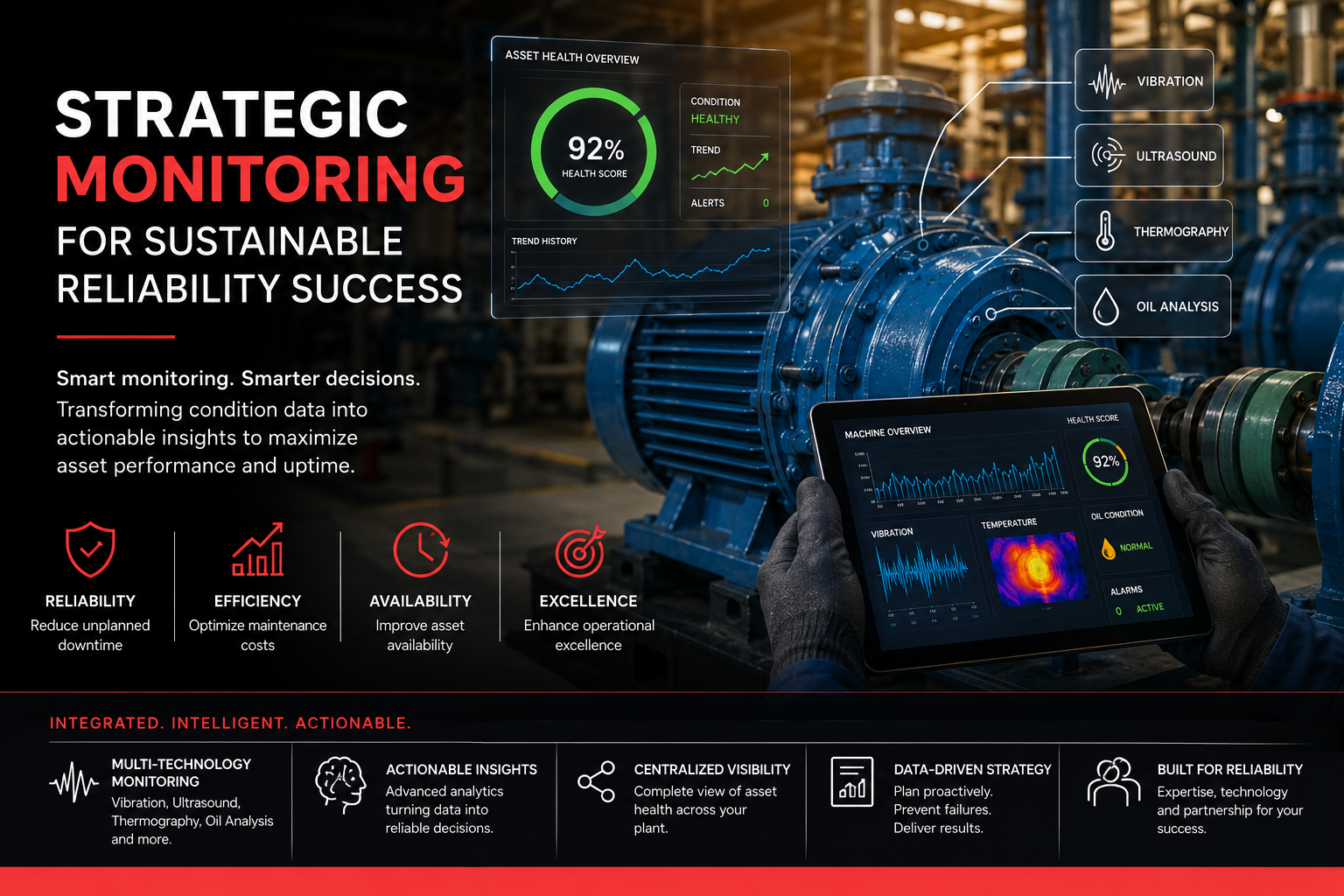
Vibration analysis
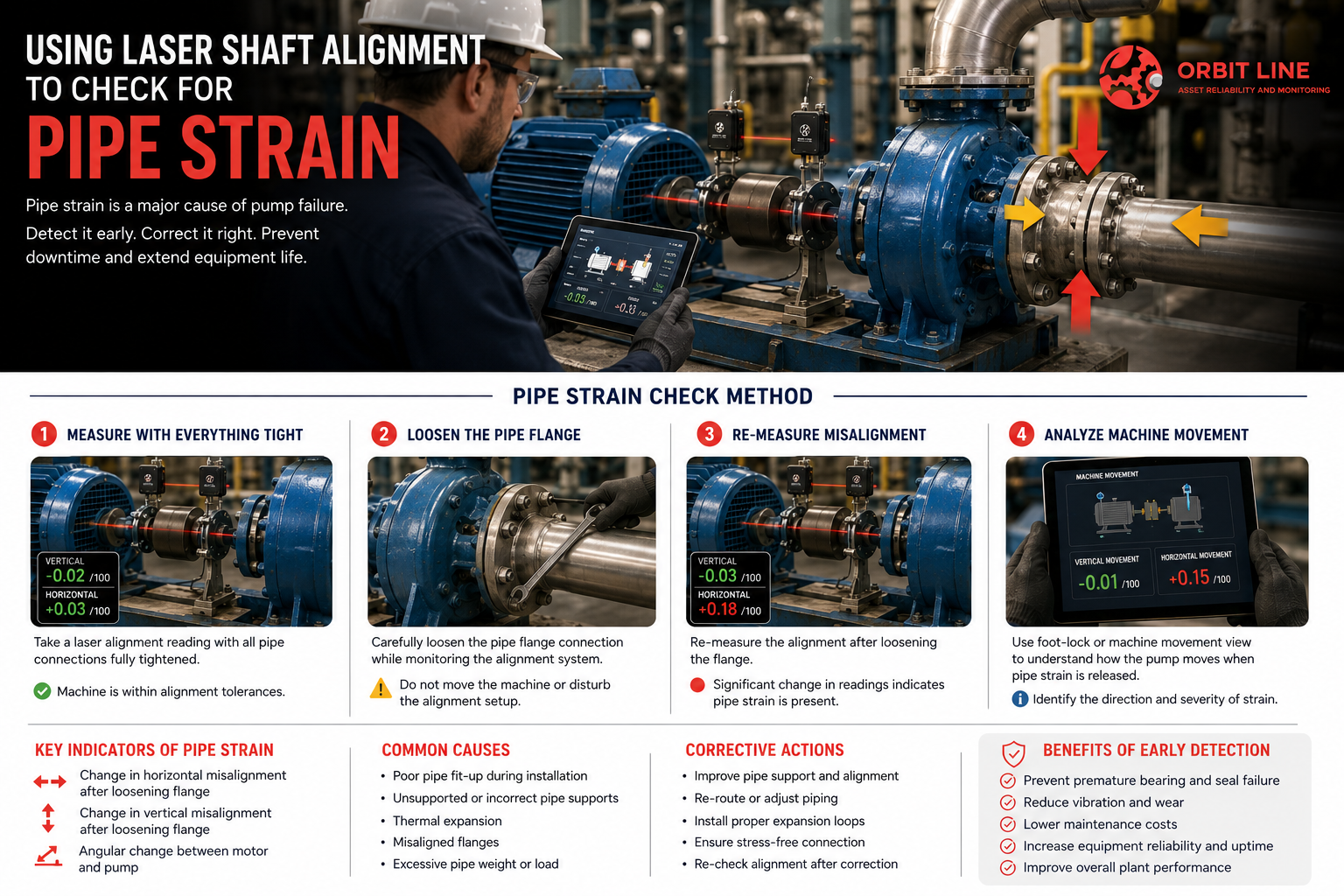
Laser shaft alignment
Soft foot correction
Base and structural checks
Operational condition verification
This ensures alignment is achieved under realistic operating conditions, not just static measurements.
Final Thoughts
Misalignment is not just a vibration issue—it is a load issue, an energy issue, and ultimately a reliability issue. Precision shaft alignment directly protects motors, reduces operational stress, and improves overall equipment performance.
If reliability matters, alignment accuracy matters.
Need Support?
ORBIT LINE – Asset Reliability & Monitoring provides:
Precision laser shaft alignment
Vibration analysis and diagnostics
Condition-based maintenance programs
Reliability training and consulting
Contact us to discuss how precision alignment can improve your equipment reliability.