
Which Strategy Is Right for Your Facility?
Maintaining equipment reliability is critical for operational efficiency, safety, and cost control. While preventive and predictive maintenance both play essential roles in asset management, understanding their differences—and how proactive maintenance elevates reliability to the next level—can help you choose the right strategy for your facility.
At ORBITLINE, we believe that the most effective maintenance programs are not one-size-fits-all. Let’s explore the pros, cons, and best use cases for each approach.
Preventive Maintenance (PM)
Preventive maintenance is time-based and planned, performed at regular intervals regardless of actual equipment condition. A common analogy is an oil change—you replace the oil based on mileage, not because it has already failed.
This approach assumes that equipment is more likely to fail as it ages, so routine maintenance is performed to reduce the likelihood of unexpected breakdowns.
Pros
Easy to implement and schedule
Reduces unexpected machine downtime
Suitable for basic or non-critical assets
Cons
Maintenance is performed whether it’s needed or not
Higher labor and material costs over time
Risk of replacing parts that still have useful life
Best Uses
Equipment with known wear or failure intervals
Assets where condition monitoring is not feasible
When preventive maintenance cost is lower than failure cost
Predictive Maintenance (PdM)
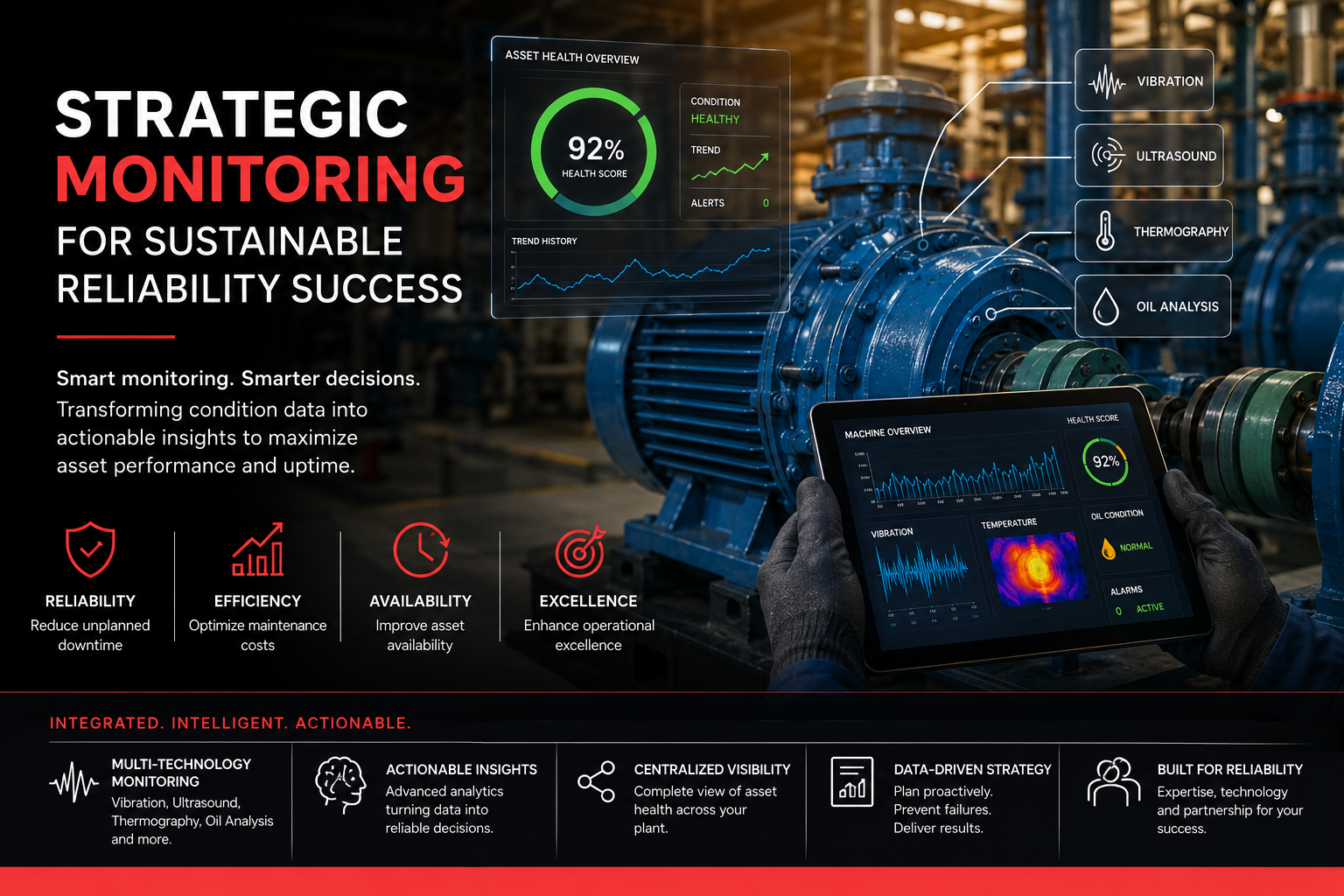
Predictive maintenance relies on condition monitoring and periodic testing to assess machine health. Maintenance actions are triggered when early signs of deterioration appear, rather than on fixed time intervals.
Technologies such as vibration analysis, thermography, ultrasound, and oil analysis play a key role in predictive maintenance programs.
Pros
Maintenance is performed only when needed
Reduces unplanned downtime
Lower spare parts inventory requirements
Cons
Some components may still be replaced earlier than necessary
Machines with rapid failure modes require frequent monitoring
Certain assets can transition quickly to catastrophic failure if not closely tracked
Best Uses
Equipment with unpredictable failure patterns
Facilities with access to condition monitoring tools
Critical rotating and process equipment
Proactive Maintenance
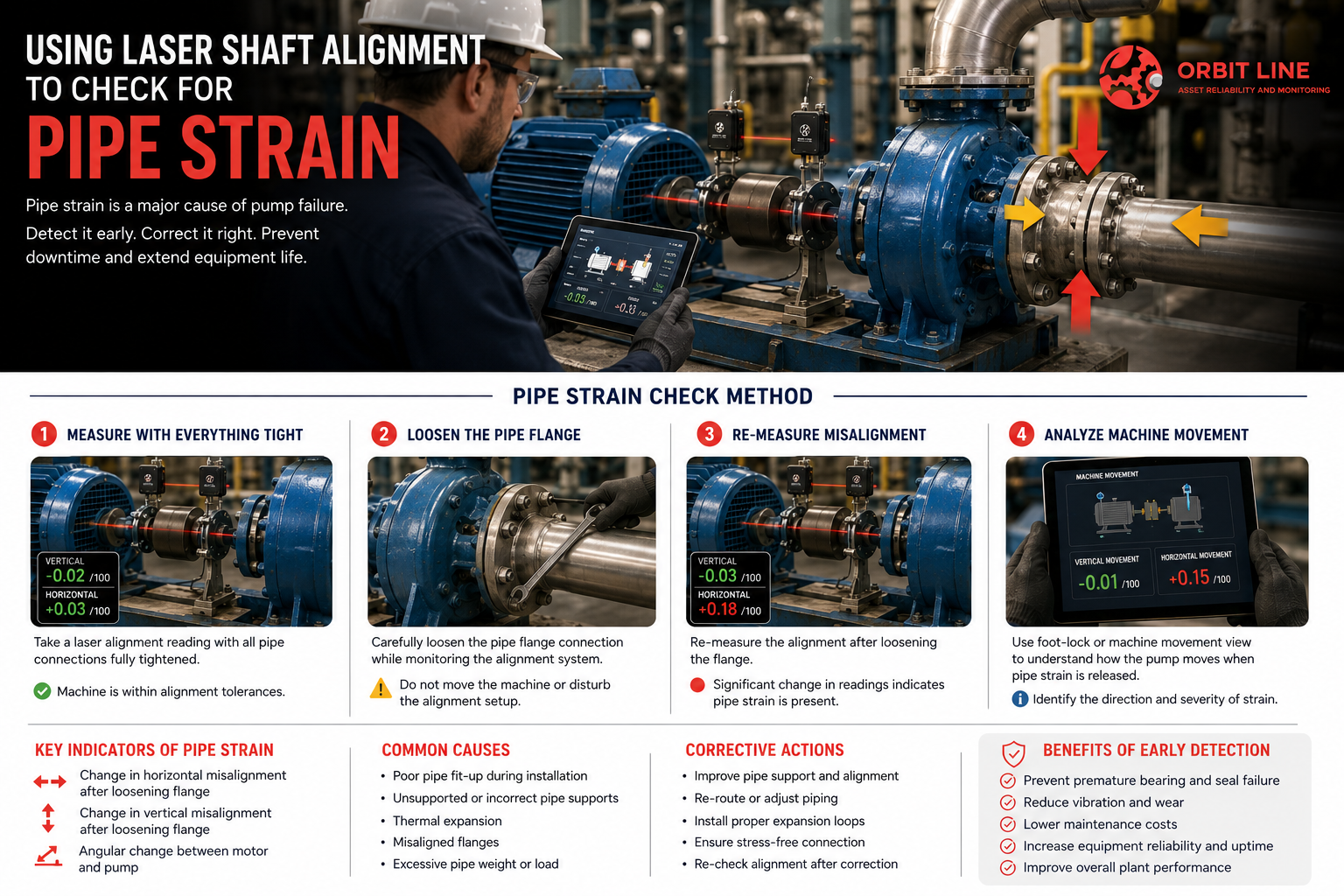
Proactive maintenance goes beyond detecting faults—it focuses on eliminating the root causes of failure. Instead of reacting to wear or waiting for alarm levels, this approach continuously monitors machine health and addresses issues such as misalignment, imbalance, resonance, lubrication errors, and installation defects.
At ORBITLINE, proactive maintenance is the foundation of long-term reliability.
Key Advantages
Identifies and eliminates root causes of failure
Empowers maintenance teams with deep asset knowledge
Minimizes lifecycle costs and downtime
Keeps machines operating at optimal performance levels
Extends equipment life and improves safety
Building the Right Maintenance Strategy
No facility relies on a single maintenance approach. The most successful reliability programs use a blended strategy tailored to asset criticality.
ORBITLINE recommends the following steps:
Create an asset register and assess the criticality of each machine
Assign the appropriate maintenance strategy (PM, PdM, or Proactive) to each asset
Understand your equipment thoroughly and store manuals, drawings, and historical data in one place
Audit and refine your maintenance plan regularly to adopt improved processes and technologies
How ORBITLINE Can Support You
ORBITLINE supports industrial facilities across Saudi Arabia with:
Vibration Analysis and Motion Amplification
Laser Shaft Alignment and Precision Balancing
Thermography and Ultrasound Inspections
Root Cause Failure Analysis
Reliability and Condition Monitoring Programs
Whether you are starting with preventive maintenance or transitioning to a fully proactive reliability strategy, ORBITLINE is your trusted partner in reliability through innovation.