Grease Compatibility: A Small Mistake That Causes Big Failures
uring professional maintenance training programs—such as precision maintenance and reliability courses—one critical lubrication topic is often underestimated: grease compatibility.
In a recent training discussion, maintenance technicians mentioned that they only use two types of grease in their facility. When asked to identify them, no one could recall the exact grease names. To clarify, one technician went to the storeroom and returned with two grease cartridges.
At first glance, everything seemed normal.
But look closer…
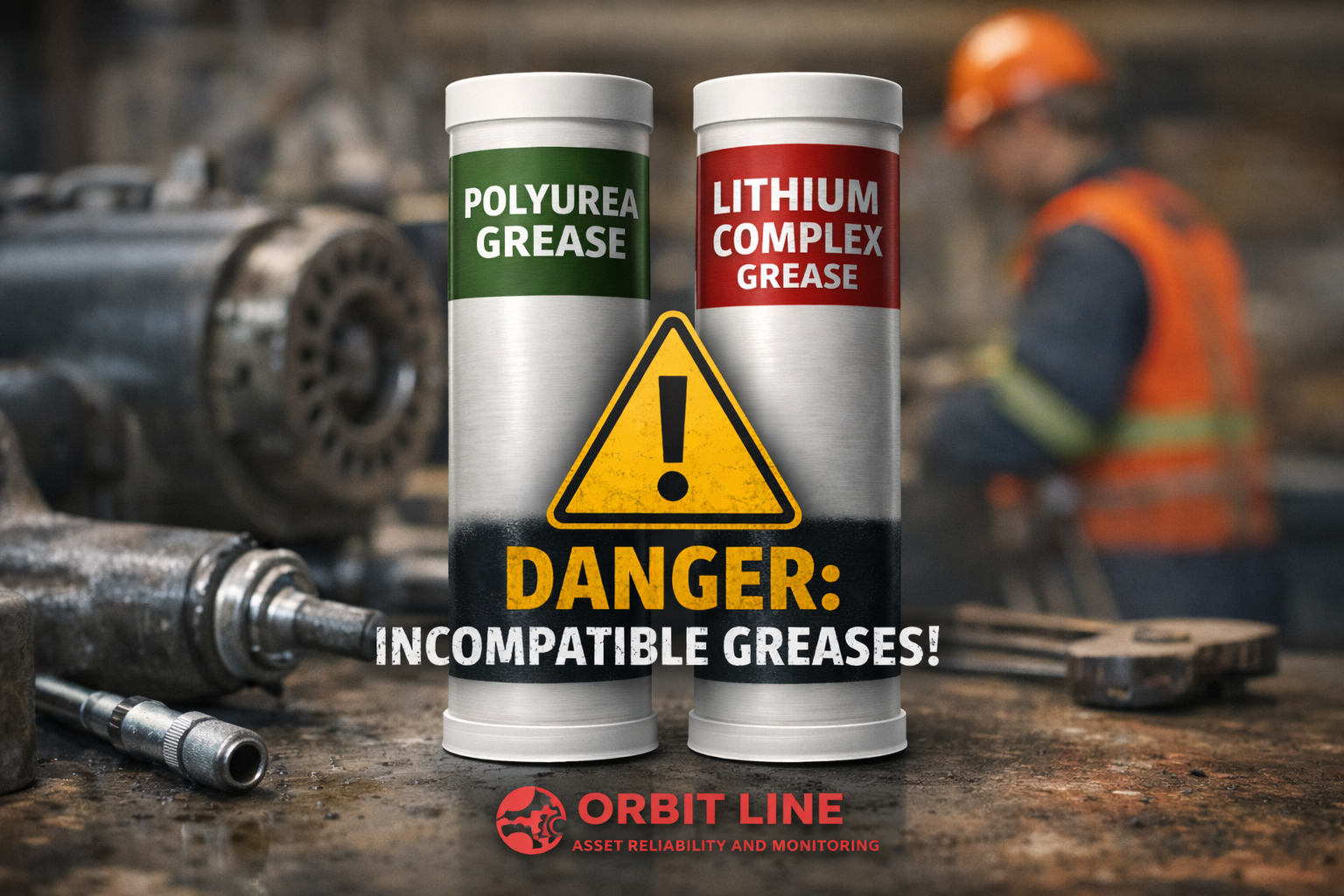
The grease tubes looked almost identical
One grease was Polyurea-based
The other was Lithium Complex-based
From a visual perspective, these greases are easy to confuse—especially during urgent maintenance situations.
How Easy Is It to Mix the Wrong Grease?
Imagine this scenario:
A grease gun runs empty
The machine must be lubricated immediately
A technician quickly grabs another cartridge from the store
Without clear identification, mixing incompatible greases becomes very likely.
The Real Problem: Incompatible Greases
According to industry grease compatibility charts:
❌ Polyurea and Lithium Complex greases are incompatible
These two grease types are also among the most commonly used greases in industrial plants, which significantly increases the risk of accidental mixing.
Would it be easy to mix them?
Yes.
Has it already happened in many facilities?
Most likely.
Even Good Systems Can Fail
Even with:
Labels
Color coding
Written lubrication procedures
Human error can still occur—especially under pressure.
That’s why facilities must go beyond basic controls and ensure that maintenance teams fully understand lubrication practices, not just follow them.
What Every Maintenance Team Must Know
To protect bearings and rotating equipment, it is essential to always know:
What grease is loaded in each grease gun
Which grease is approved for each machine
That incompatible greases are never mixed
Failure in any of these areas can lead to:
Bearing overheating
Grease breakdown
Increased vibration
Premature equipment failure
ORBITLINE Insight
At ORBITLINE, we frequently identify lubrication-related issues during:
Vibration analysis
Ultrasound inspection
Root cause failure investigations
Grease compatibility mistakes often leave a clear vibration and temperature signature—but by the time they appear, damage has already begun.
Prevention is always cheaper than repair.